The growing safety crisis around e-scooters and e-bikes
E-scooters and e-bikes have taken over streets across Queensland, offering a quick and convenient way to get around. But behind their popularity lies a worrying trend – a surge in accidents, serious injuries, and fatalities.
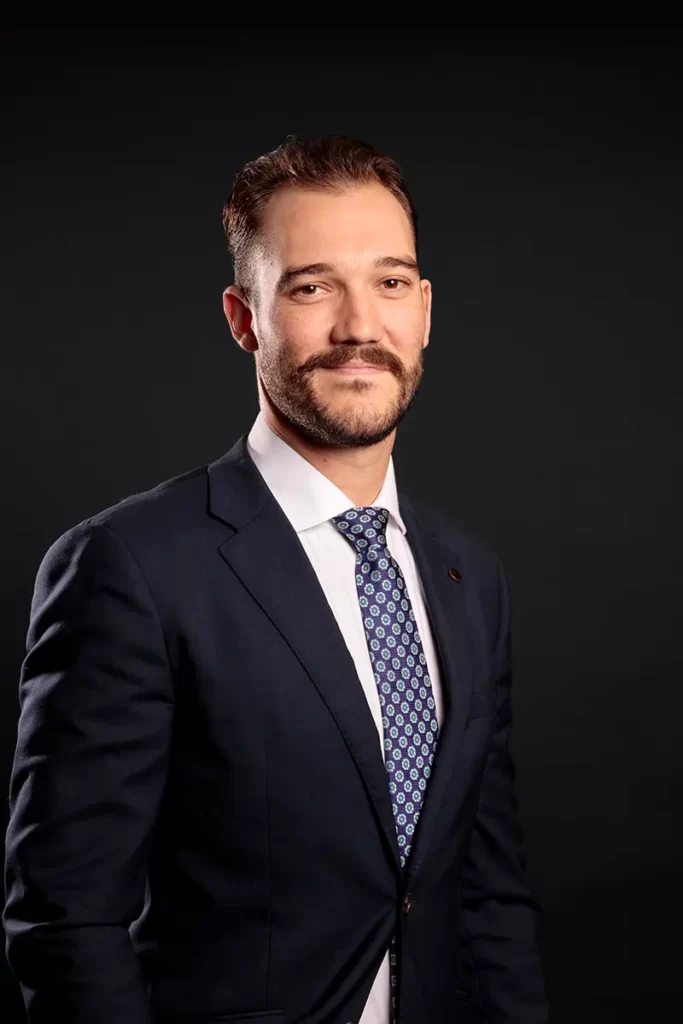
In this episode of Law Talks on 4CRB, Compensation Law Senior Associate Henry Garrett joins Robyn Hyland to unpack why these devices have become such a major safety concern and what needs to change before more lives are lost.
Henry explains how hospital admissions for e-bike injuries have soared, with riders and pedestrians both at risk — particularly on the Gold Coast and in Brisbane. Unlike car accidents, there’s no compulsory third-party (CTP) insurance scheme for e-scooters or privately owned e-bikes, leaving many injured people without legal recourse.
Henry outlines the difficult reality for victims, the gaps in current legislation, and the recommendations he put forward in his submission to the Queensland Parliamentary Inquiry into e-scooter and e-bike safety.
From stronger penalties and rider education to the potential need for licensing, registration, and insurance, Henry highlights practical reforms that could help protect road users and restore balance between convenience and community safety.
Whether you’re a rider, driver, or pedestrian, this episode is a must-listen for anyone concerned about how fast this issue is escalating and what can be done to prevent further tragedies.
Robyn: Good morning and welcome to another edition of law talks here on 4CRB. And today we are talking about a very hot topic at the moment, e-scooters and e-bikes have become a popular way to get around, but they’ve also created a growing safety problem.
Hospitals are reporting alarming numbers of injuries and the Queensland Parliament has launched an inquiry to address community concerns. Today we’re talking about why stronger regulation is needed and what happens when someone is injured with Atwood Marshall Lawyers’ Compensation Law Senior Associate Henry Garrett.
Thanks for joining us today, Henry.
Henry: Hi Robyn. Thanks for having me.
Robyn: Well, this seems to be the topic that is dominating the headlines at the moment. E-scooters and e-bikes are everywhere, particularly on the Gold Coast and in Brisbane. Why has safety around these devices become such a major issue?
Henry: Well, we just had a long discussion about that off air, didn’t we?
Robyn: We did.
Henry: You can’t help but notice the prevalence of them on the roads. I mean, they frustrate me from time to time when you see someone flying through on a main road with no helmet on, on the back wheel, so it’s come to no surprise that these government grants that were given to residents or anyone that applied for them, it was an incentive given by the government, they handed out a 500 or $1000 incentive for people to buy e-bikes, so they’re everywhere.
But it used to be only restricted pretty much to those Lime scooters and Lime bikes. Safety hasn’t caught up with the prevalence of them yet, which has led to some catastrophic incidents. Very recently there was a young gentleman who passed away in a fatal accident in Tallebudgera.
So, they’re everywhere and we’re getting a lot of inquiry on them.
Robyn: And I can imagine it’s only going to get worse. And the Gold Coast Bulletin recently reported almost 750 e-bike hospital admissions in a single year.
What types of injuries are you seeing in these cases?
Henry: You get a range of injuries, starting from some minor abrasions and cuts and soft tissue injuries where someone’s just fallen off. That statistic is probably dedicated to our older users of e-bikes, normally riding home from the pub or a club, and they fall over and lose balance or crash into one another. But then you get the more severe cases, such as the one I mentioned earlier where someone’s lost their life as a result of being hit by a car, by either failing to give way or blow through a red light.
So you see some catastrophic injuries, as serious as a fatal accident. But not to a lesser extent, but not as severe as a fatal accident you know, having elderly people, elderly members of our community being hit on sidewalks and pedestrian crossings, and that opens up a range of severe orthopaedic injuries, pelvis, lower leg, elbows, knees, shoulders, everything.
Robyn: Yeah, which can be catastrophic injuries for elderly to sustain.
Now, Henry, unlike car accidents, there’s currently no compulsory third party, that CTP insurance scheme for e-scooters or e-bikes. What does that mean for someone who is injured by one of these devices?
Henry: A lot of the time it’s a really difficult conversation that I’m having with these people because it’s tough luck.
That’s the brunt of it. Now some people are fortunate enough to have willing, for example. this is if a child or a minor is found to have injured someone on their bike or caused significant damage to a vehicle, sometimes and in, rare circumstances, you have the parents of that minor or child stepping in to make sure that the vehicle is well if property damage is suffered, they’re rectifying that, and if injuries have been suffered then they’re covering the medical bills. But often it’s the case that it’s either a hit and run and because we’re dealing with young children who are operating something that can travel up to 50 kilometres an hour.
Robyn: Who have no experience or have not had to go through getting a driver’s licence and have no idea of the intricacies of road rules.
Henry: Yep. So, a lot of them are finding out the hard way what first of all, what it’s like to recover from an injury, but also what it’s like to deal with police, deal with a very angry injured person or aggrieved person as a result of property damage, so it’s a real shock to the system for some of these children and I and I do feel for them as much as it’s frustrating to see in our industry where people are being injured so severely and people are losing a lot of money, if their cars uninsured or some damages suffered as a result of someone’s carelessness or negligence.
Robyn: But even if you are insured, you’re still going to have to pay the excess.
Henry: Yeah, that’s right.
Robyn: So, Henry, you put forward a submission to the parliamentary inquiry into e-scooters and e-bike safety. What were the main concerns and recommendations that you raised?
Henry: Some of the measures that have been taken already, not just locally here in Queensland or more specifically on the Gold Coast, there are some recommendations that first of all, I’ll start with the concerns, my concerns were, injuries are rising. The prevalence of e-scooters and e-bikes are rising, and the law isn’t being updated with that significant increase in usage.
So, first of all, the main concern was if someone gets injured in an in an accident involving an e-bike, there needs to be some form of insurance policy attached to that vehicle, much like you have your motorised scooters for the elderly, they have a restricted registration where if they cause an injury or damage, there’s insurance.
But in addition to that, what one of my concerns was, there was there was a few, but one of my main concerns was education for our young people seems to be lacking because of their, and you’ve seen it yourself, their brazen attitude to break the law.
When I was their age, I was petrified of riding on the road, let alone in the middle of the road with no helmet on.
Robyn: Going the wrong way on one wheel.
Henry: First of all, I’d have to feel the wrath of my parents if they found out about it, but God forbid I saw a police officer or any person of authority. So, look, not to make it sound like I’m old at all.
Robyn: You’re in good company, Henry.
Henry: Yeah. But look. I am I. I’m just shocked as to…
Robyn: The brazen behaviour that you witness on the road and I think that’s what the majority of the community are saying as well is just that total disregard by a lot of these e-bike riders. It’s not all of them, but there are a lot that there is that blatant disregard to the road rules and the motorists that they share the road with.
Henry: Yeah. So, the recommendations in summary were increased education in school for these younger children, increased fines and penalties for the adults that choose to drive or operate one of these e-bikes or e-scooters. Because again, I’ve had a main focus on children for the purposes of today, but us adults, we’re certainly contributing to those statistics as well.
But also, there’s something called Geo mapping they’ve introduced that in Brisbane which has been quite successful, where the scooter or the e-bike identifies, and this is strictly, these don’t apply for people who have sought their own e-bike or e-scooter. These are referring to the hire type, like Lime. Yeah, they slow down, and they don’t go past or beyond a certain speed limit if they’re in a built-up area.
So, that showed some benefits. It’s difficult to read the statistics. But you yourself can, when you’re limited, speed’s a major factor. So, if you decrease the speed, you will therefore reduce the significance of any injury if there’s a collision.
Robyn: But how do you control that with when you see these bikes are being imported and you know you hear these stories that the young ones can actually increase the speed and get them that they can be riding on M1s and keeping up with traffic and they can be doing 80 plus kilometres an hour, that’s just frightening.
Henry: Yeah, it’s I mean, I shriek when I see it. Because working in personal injury for over a decade, I know the impact on someone’s life when they’re skidding across the road at 80 kilometres an hour or more, even less 50, 40 kilometres can do a lot of damage to a young person without any protective clothing, let alone the collision with the with the vehicle travelling at an equal speed in the opposite direction.
So that’s where we’re seeing major orthopaedic injuries because they’re coping a tonne, a vehicle that weighs a tonne, coming in the opposite direction. That’s awful.
Robyn: But a comment I get a lot particularly from the elderly is that if they were to collide with one through no fault of their own, they’re concerned that they will be in trouble. And they say that is something if they caused any major damage or killed an e-bike rider that they have to live with that for the rest of their life, when perhaps they’ve done nothing wrong and is just in the wrong place at the wrong time from one of these reckless e-bike riders.
So, from a legal perspective, what options does someone have right now if they are injured by an e-scooter or an e-bike?
Henry: Not many. I covered it earlier where you can make a claim personally against what is often a minor, and the parents can step in, but…
Robyn: If they don’t, too bad. Too sad. And as you said, that’s if they even stop.
So, Henry, some people will argue that e-scooters reduce congestion and are good for the environment. How do we balance those benefits with community safety?
Henry: Well, they wouldn’t be wrong in arguing that they do reduce congestion and they’re really fun. But in terms of balancing that with safety, you need proper legal avenues for people to pursue when they’re involved in an accident. Because at the moment you’ve got people who are causing significant bodily harm to others and costing people extreme amounts of money to repair vehicles or property with no legal recourse. So that to me, would appear to be an imbalance in the convenience of e-bikes and e-scooters versus a life changing event for someone.
I called upon Queensland police to get more involved. They’ve got their hands full with everything that’s going on in the community other than e-bikes and e-scooters. But you know, I suggested that if people were found to be doing something so callous and wrong then just take the bike off them. They’ll only lose one bike. They won’t replace it. These things are worth 3, 4, $5000.
Robyn: Yeah, they’re not cheap.
Henry: So, for a young kid who may have saved up for a year or two and then got the grant, that’s a huge amount of money for them.
Now, if they’ve got parents that are silly enough to buy them another one then that’s on the parents.
Robyn: Yeah. So finally, what advice, Henry, would you give to both riders and pedestrians to protect themselves while the law catches up with this growing problem?
Henry: Well, for the riders, it’s difficult to get through on this type of platform, I suppose but just be mindful that you could be the next person to change someone’s life if you’re not careful, whether that be brushing through giveaway signs and being impatient on footpaths.
These things can cause severe damage to someone if you hit them because they are they’re built of steel, they’re heavy, they can go, as you say, up to 80 kilometres an hour, they can cause some really, really significant injuries to someone.
But for pedestrians, I mean you’re an unprotected pedestrian trying to get out of someone’s way. But when I was growing up, if you were doing the wrong thing, someone would tell you. So as pedestrians, I suppose we just have to speak up and give them a bit of a spray on the way past if they’re doing the wrong thing, try and hold these people accountable. Because it is. It’s both minors and adults who are in the wrong here. I’m not just focusing on minors. Whilst they are probably contributing the most to these statistics. And even in the unfortunate case where someone’s lost their life, that should be a wakeup call for all of them, anyone who owns an e-bike or an e-scooter to be safe.
Robyn: Henry, do you believe that e-bike riders should be licenced?
Henry: Yes.
Robyn: If it’s a motor vehicle of any description, shouldn’t they be required to hold a driver’s licence of some sort just like a motorbike?
Henry: They are almost an equivalent to a motorcycle. You have to sit through, well perhaps not rigorous testing, but there is quite a significant administrative or sorry, theory-based and practical based training that you must go through to own and be licenced to ride a motorcycle.
Robyn: And it needs to be registered.
Henry: Yeah. So that was something that I had had suggested in my submission to the Parliament, was to register them. I think that takes away a lot of the burden. Yes, administratively, and it might cost us a lot of money. But in the grand scheme of things, e-bikes aren’t going anywhere, nor are e-scooters. So, if we can take some steps now to protect people legally and medically, I think people will start behaving.
Robyn: Look, I think having to get a driver’s licence, having to have these bikes registered and insured, I think that weeds out the reckless riders as opposed to the ones that are buying them for the right reasons for the convenience for, you know, the lack of congestion, all of that, and I think it’s a great way to start.
And I believe there’s a new enquiry coming into Queensland in October, so hopefully we see some changes and we can get things up to speed and get this situation which feels like it’s just getting out of control daily, under control.
Henry: Absolutely.
Robyn: Thanks for joining us today, Henry.
Henry: Always a pleasure. Thank you.
Robyn: You’ve been listening to law talks here on 4CRB, which you can hear every Friday morning from 9 o’clock, and if you’ve missed any of this interview, it is available on our website 4crb.com.

Attwood Marshall Lawyers is proud to partner with 4CRB (89.3FM) to deliver educational and informative legal content to the Gold Coast and Tweed community.
Established in 1984, Radio 4CRB is a local community radio station on the Gold Coast that is also a registered charity. Its purpose is to foster community engagement.
Every Friday from 9am (QLD time) on ‘Law Talks’, join one of our experienced lawyers as they discuss legal issues that impact the community.
For over five years, Attwood Marshall Lawyers has collaborated with 4CRB in this important information service. ‘Law Talks’ is an essential part of our contribution and service to the community, sharing knowledge and experience across various legal topics. We believe it is essential to educate the public about their rights and help them navigate an increasingly complicated legal system.